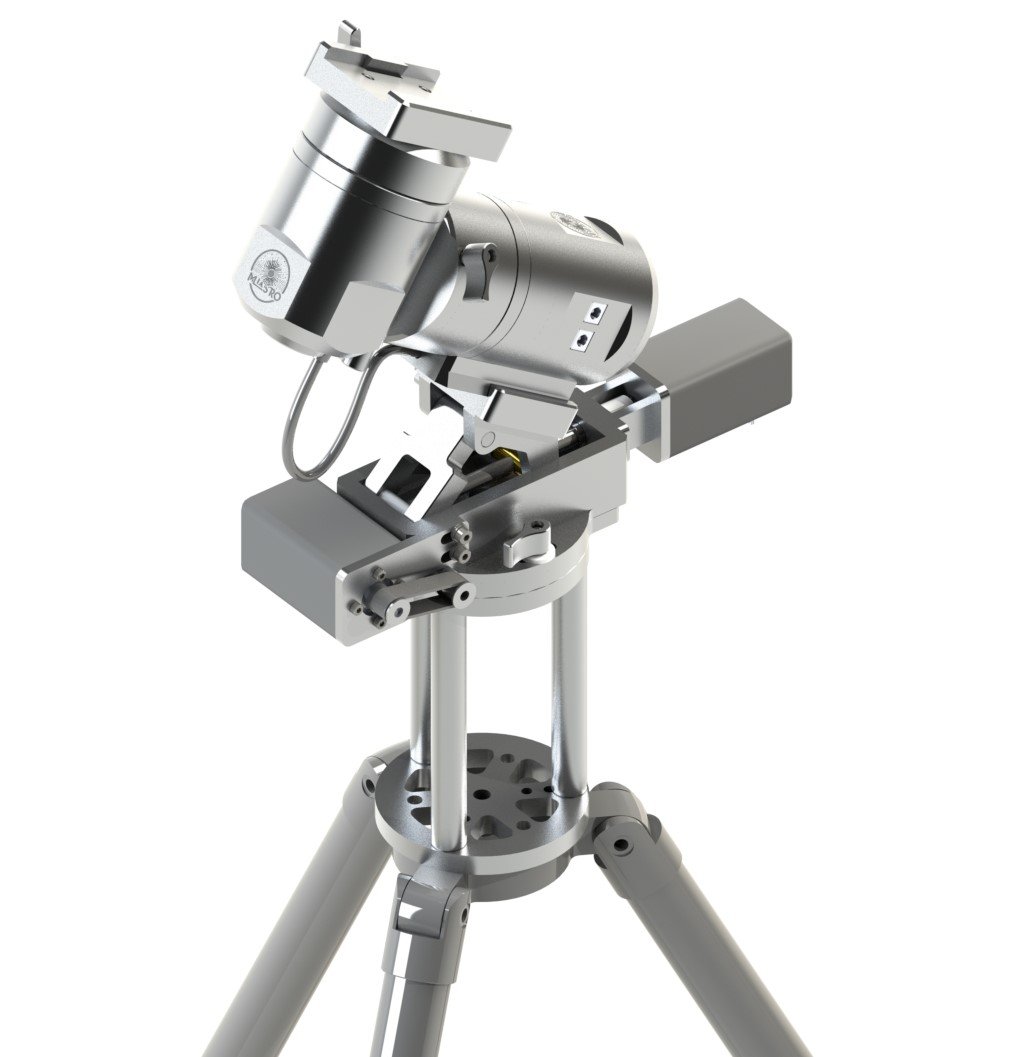
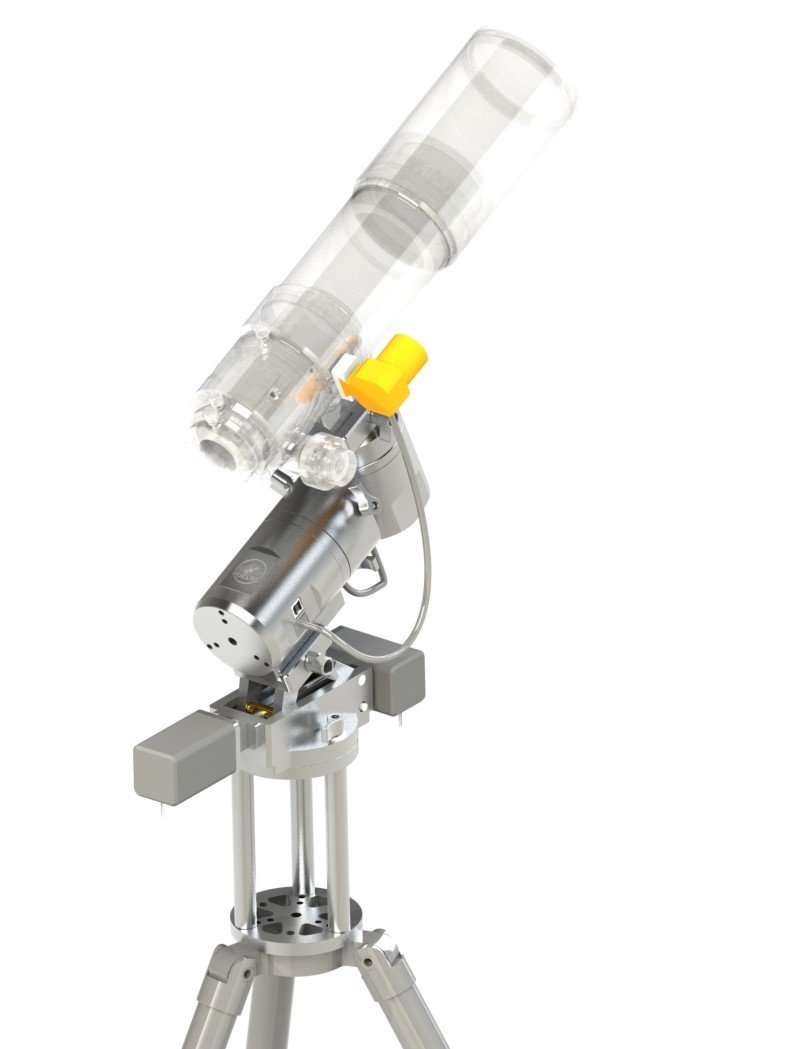
MLAstro Trinity (Product Under Development)
Frequently Asked Questions
Q: When will this be available?
A: Preorder open before Chrismas 2026 with first batch shipping around early 2027.
Q: Are the pricing/specs fixed?
A: No, the mount is still underdevelopment. The specifications/pricing shown on this page describe our current prototypes and design targets and may change as we continue testing and optimizing the production design.
Q: Can you notify me about when the Trinity preorder open?
A: To receive updates on MLAstro Trinity throughout its development and be notified when preorders open, subscribe to our mailing list: mlastro.com/subscribe
Q: What tripod connections does the Trinity uses?
A: It uses the same connecting screws as the SAL-33, which means it can reuse the vast tripod adapter of the SAL-33 and the One. We will also release a light weight tripod extension pier designed for the Trinity to keep the light weight and small foot print.
Description
*To receive updates on MLAstro Trinity throughout its development and be notified when preorders open, subscribe to our mailing list: mlastro.com/subscribe
MLAstro Trinity
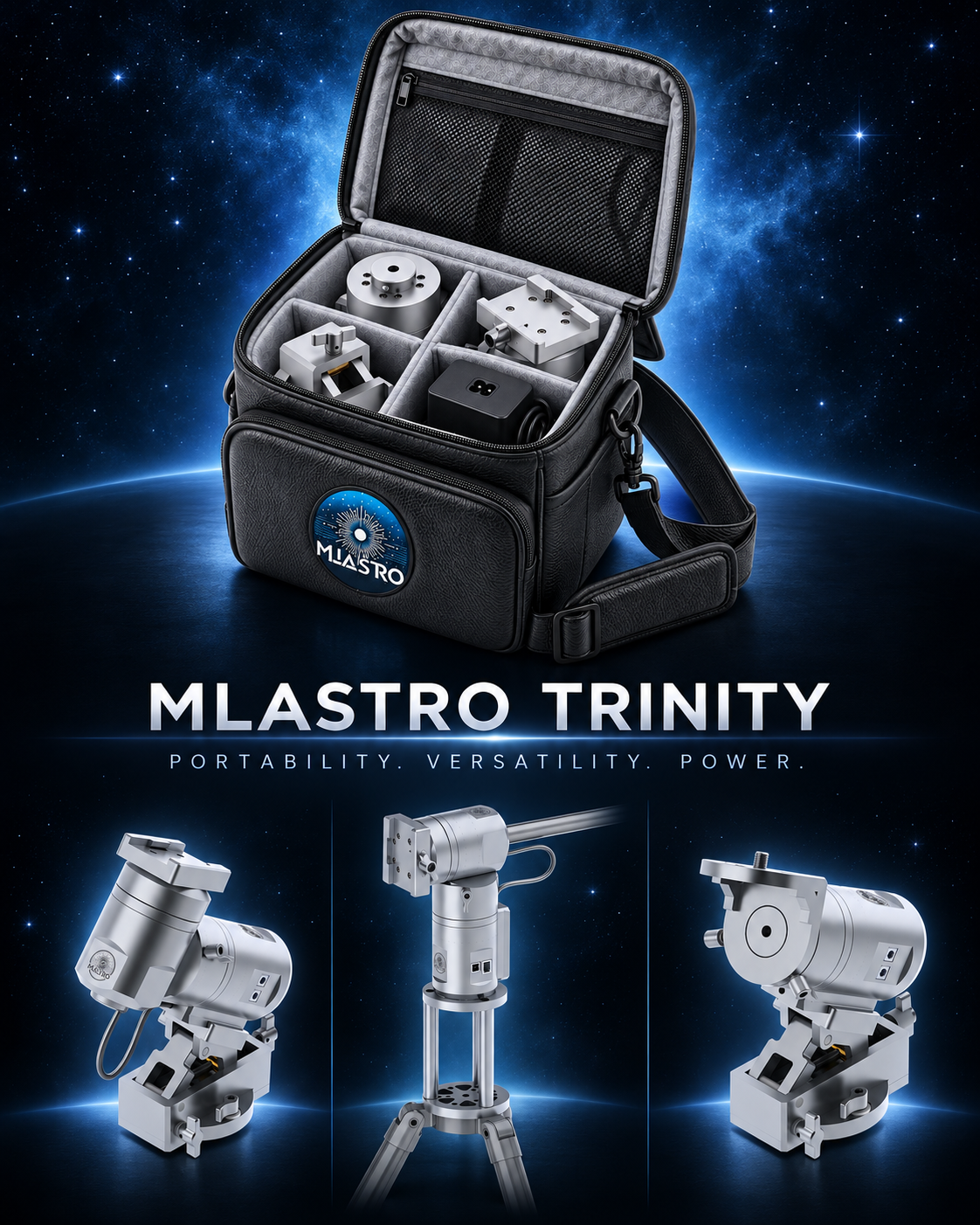
ONE MOUNT. THREE WAYS TO EXPLORE THE UNIVERSE.
MLAstro Trinity is our most portable mount yet, built around one simple idea: take only the mount you actually need.
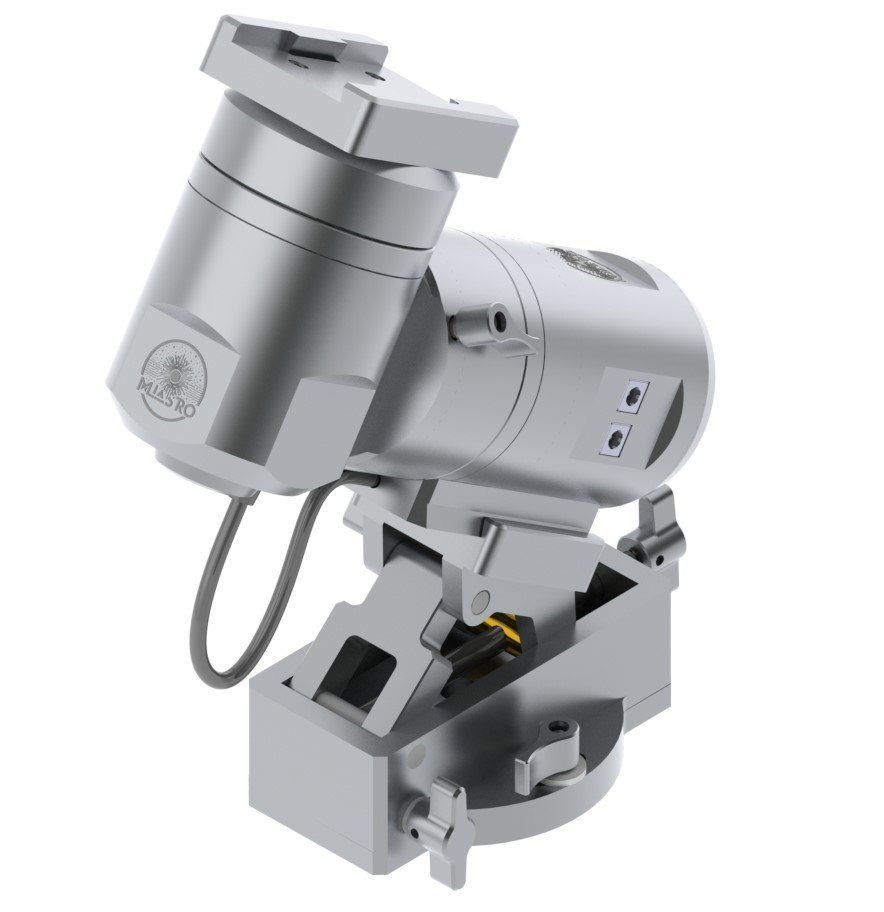
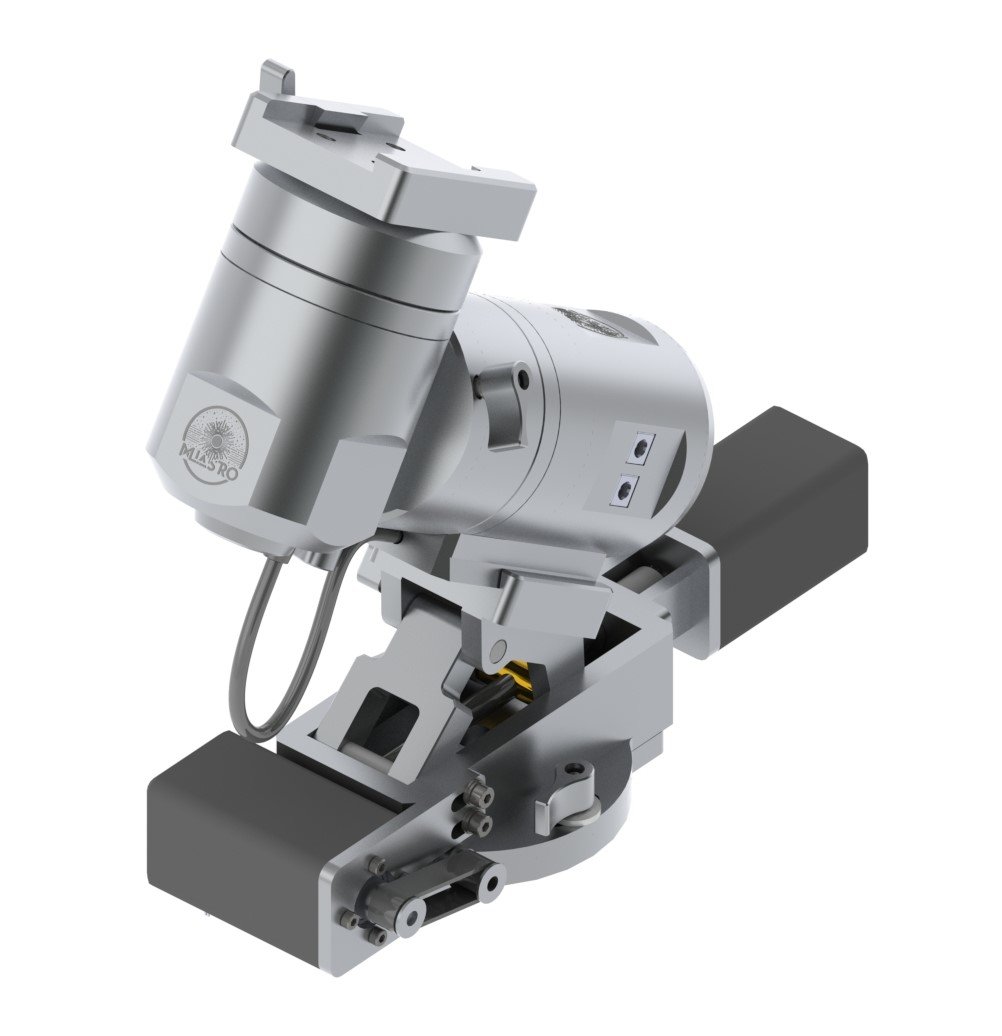
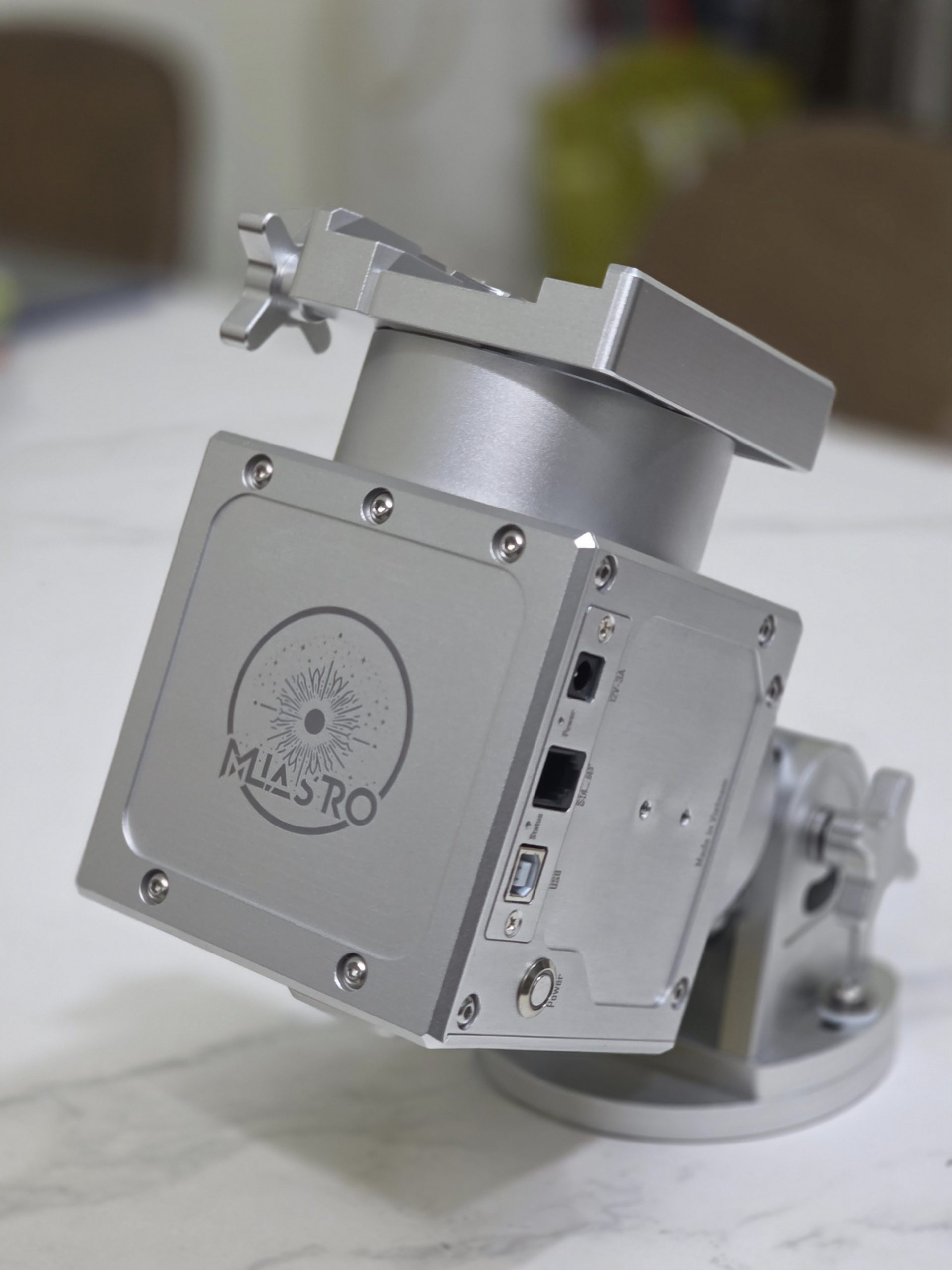
A completely modular architecture allows Trinity to transform between three configurations: a 1.3 kg Star Tracker, a 2.7 kg Alt-Az mount, and a full equatorial astrophotography mount weighing less than 3.5 kg.
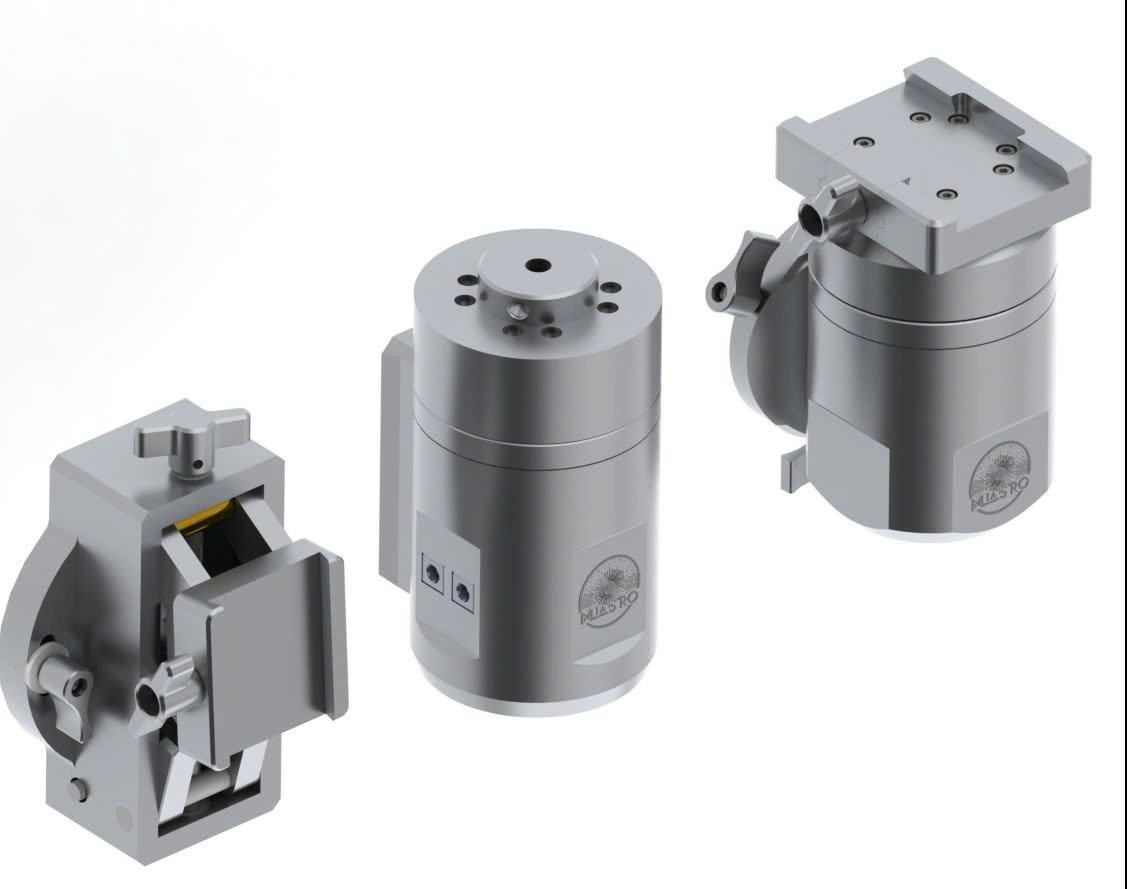
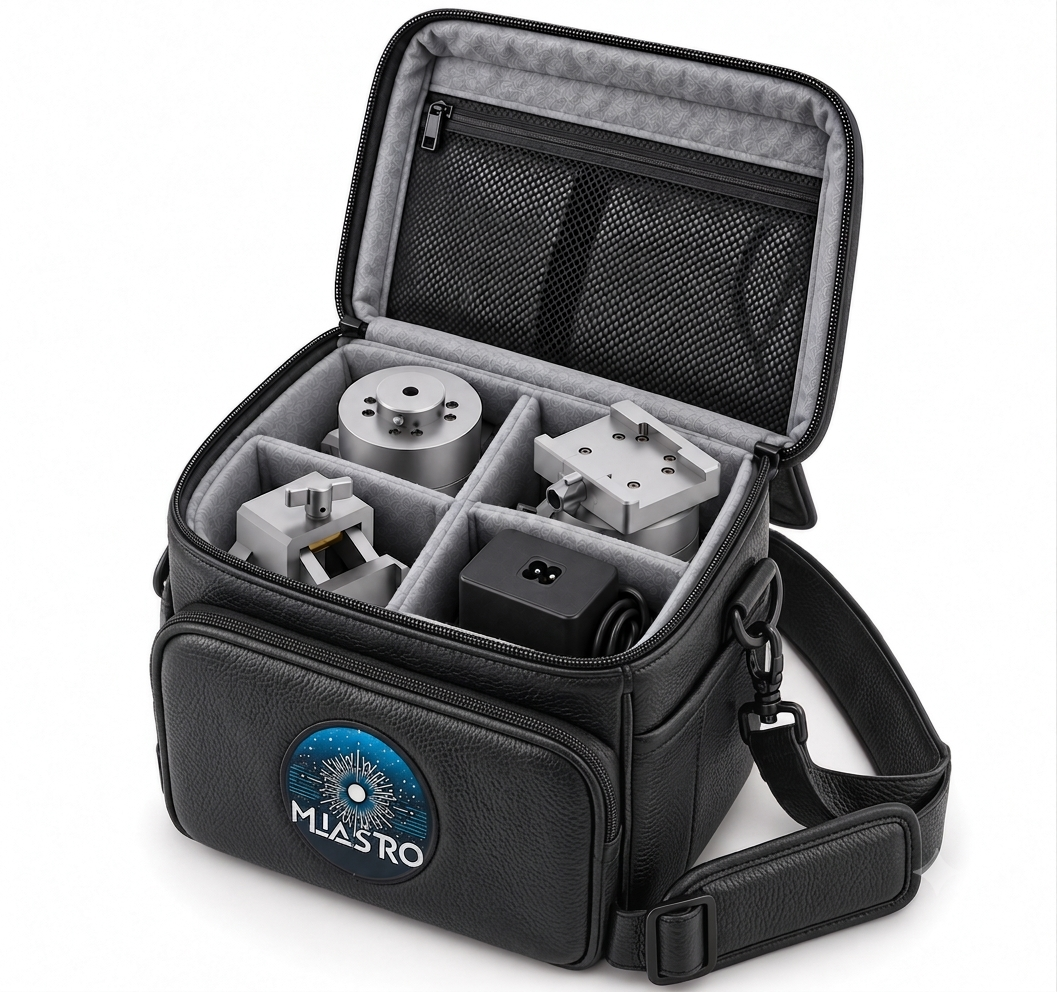
Each major component can be separated for transport, with individual modules weighing approximately 0.8 to 1.4 kg. Instead of carrying one large mount head, Trinity can be broken down into small components that fit easily into a compact camera bag or can be distributed throughout your luggage.
Despite its size, Trinity is not designed as a lightweight compromise. Size 14 astronomy-optimized strain-wave gearboxes on both axes provide a target payload capacity of approximately 7.5 kg without a counterweight and 10 kg with a counterweight.
This is MLAstro Trinity.
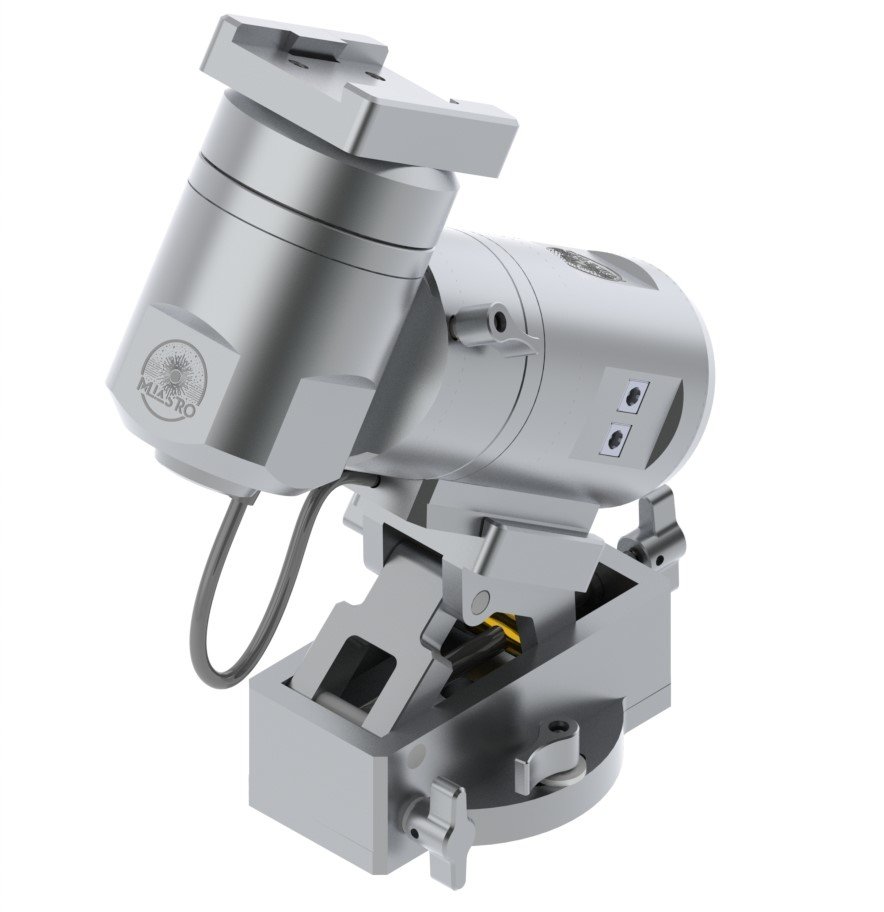
THREE MOUNTS IN ONE
Trinity was designed from the beginning as a modular system rather than a conventional mount that happens to come apart.
The RA drive, DEC drive, and equatorial wedge are independent modules. Each can be added or removed depending on what you are doing that night.
Going on a long hike with a camera and lens? Take the Tracker.
Doing a quick visual session? Add the DEC axis and use Trinity in Alt-Az.
Setting up for deep-sky astrophotography? Add the ZeroShift EQ wedge and you have a complete equatorial mount.
One system can therefore replace three separate pieces of equipment.
TRINITY TRACKER
Approximately 1.3 kg
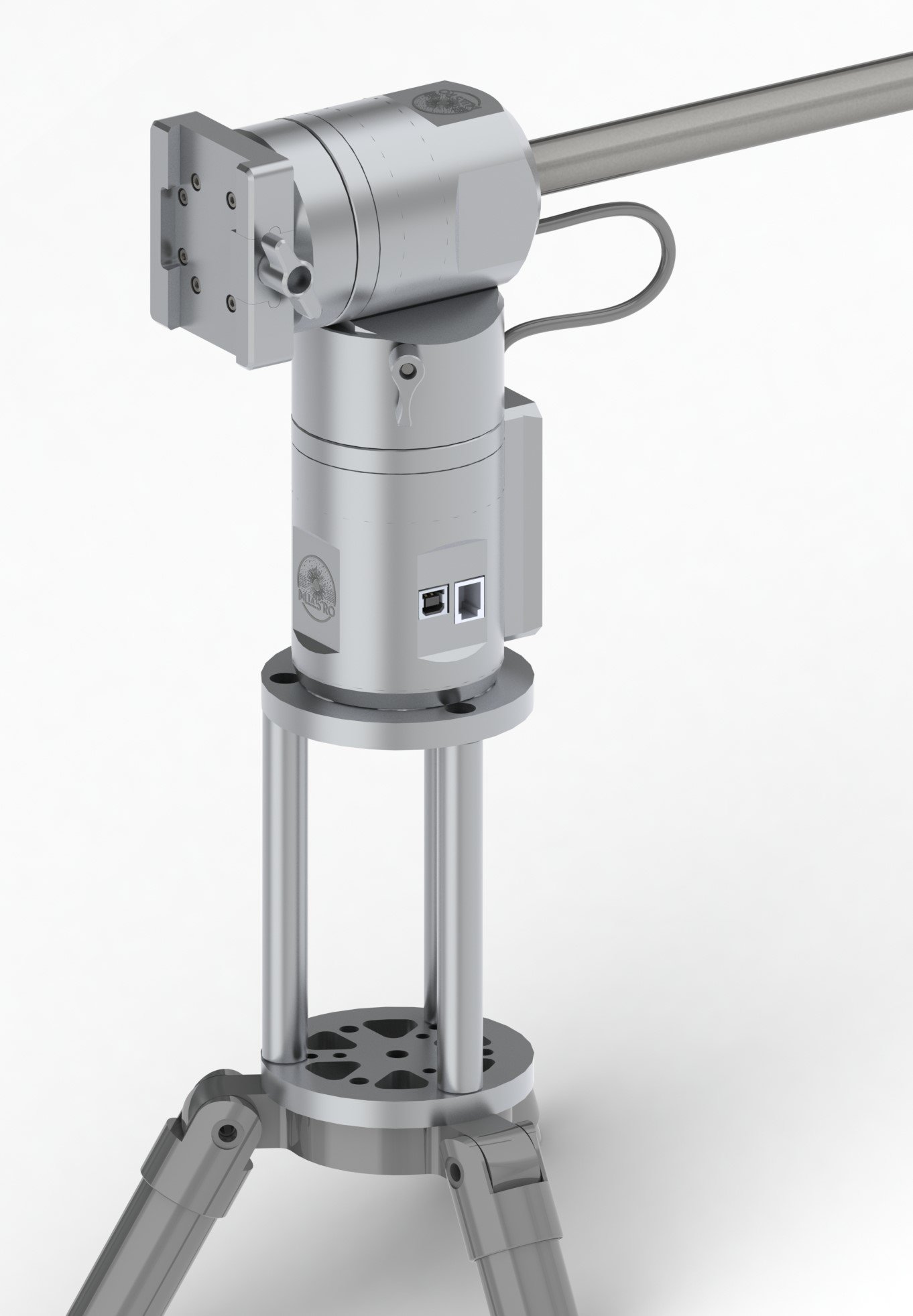
Remove the DEC axis and EQ wedge and the RA module becomes MLAstro Trinity Tracker.
At approximately 1.3 kg, it is small enough for travel, landscape astrophotography, wide-field imaging, time-lapse panning, and situations where carrying a complete two-axis mount simply doesn’t make sense.
But Trinity Tracker isn’t built like a conventional lightweight camera tracker.
The same RA drive forms the heart of the full Trinity mount and uses a Size 14 astronomy-optimized strain-wave gearbox. You are essentially taking the drive system of a much more capable astronomical mount and using it as a compact tracker.
For precise polar alignment, simply bring the Trinity ZeroShift wedge. For an even lighter setup, Trinity Tracker can also be mounted using a suitable photographic tripod/ball-head arrangement.
Small enough to travel with. Built like a real astronomical mount.
TRINITY ALT-AZ
Approximately 2.7 kg
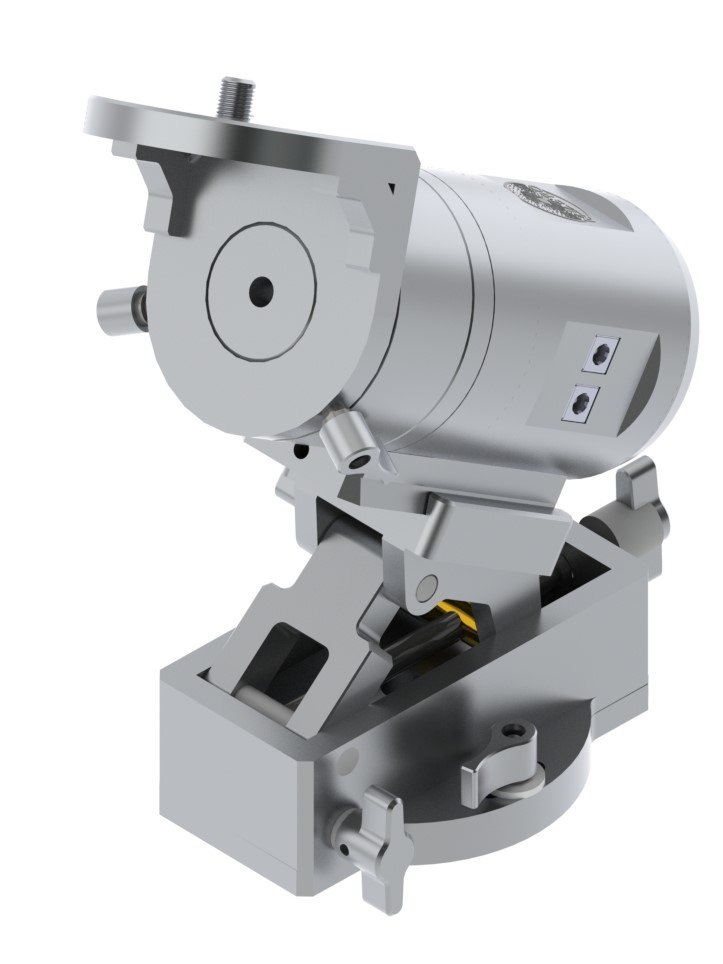
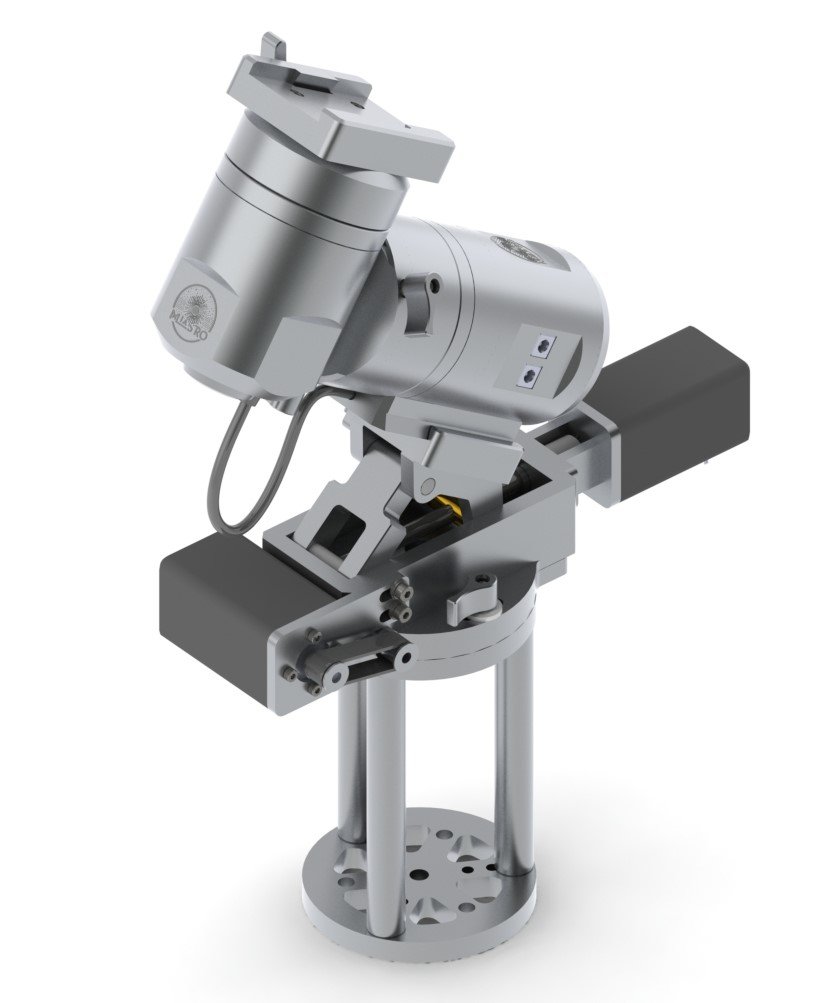
Add the DEC module directly to the RA module, leave the EQ wedge at home, and Trinity transforms into a compact two-axis Alt-Az mount weighing approximately 2.7 kg.
This configuration is designed for quick visual observing, outreach, planetary imaging, Solar observing, and other applications where an equatorial setup simply isn’t necessary.
Unlike a typical lightweight single-arm Alt-Az mount, Trinity retains the rigid mechanical architecture, dual strain-wave drives, and load-bearing structure of the full astronomical mount.
The goal is simple: keep the footprint and weight extremely small without making the mount feel small once a telescope is sitting on it.
Pair it with a compact refractor or SCT and you have a highly portable observing system that can be carried and assembled in individual lightweight sections.
TRINITY EQ
Under 3.5 kg
Add the Trinity ZeroShift wedge and the same mount becomes a complete equatorial astrophotography system weighing less than 3.5 kg.
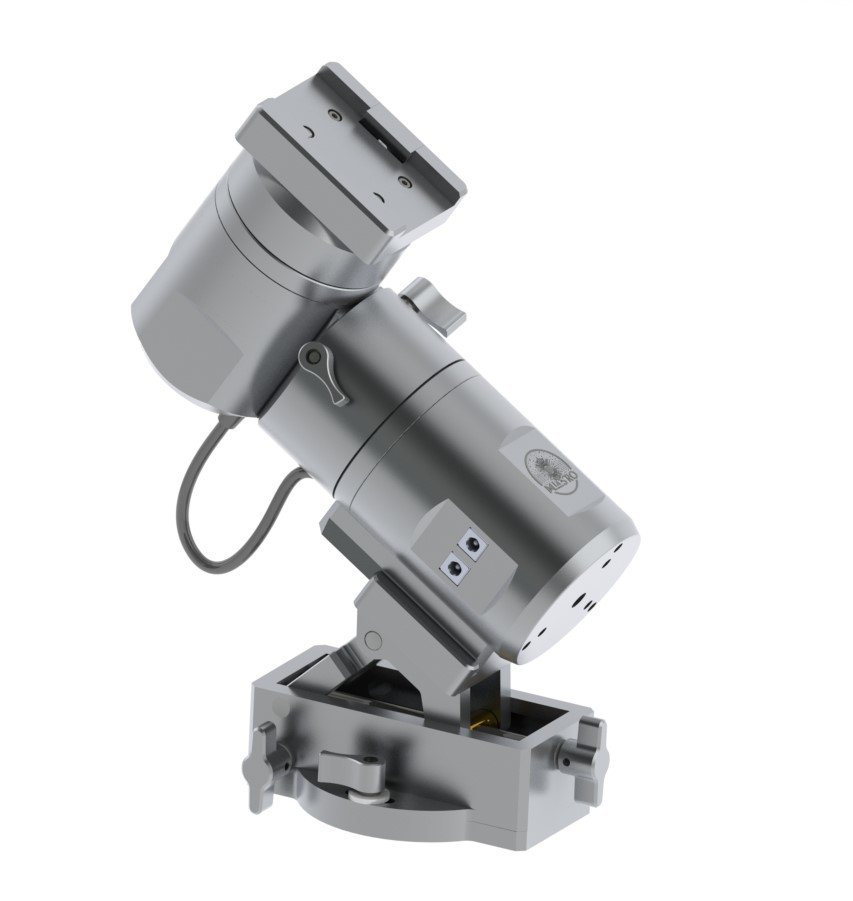
Both RA and DEC use Size 14 strain-wave gearboxes optimized specifically for astronomical applications.
Current target payload capacity is:
• Approximately 7.5 kg without counterweight (Full capacity can be used for Astrophotography)
• Approximately 10 kg with counterweight (Full capacity can be used for Astrophotography)
That gives Trinity the capacity for a proper astrophotography setup while keeping the entire mount head small enough to travel in a compact bag.
This balance is the entire point of Trinity.
We didn’t set out to make the smallest mount possible.
We set out to make the smallest mount we would actually want to use.
ZEROSHIFT POLAR ALIGNMENT
Small mounts often make polar alignment more frustrating rather than less.
Trinity uses the MLAstro ZeroShift mechanism developed around a simple requirement: when you finish adjusting polar alignment, the mount should stay where you put it.
On many conventional wedges, you adjust altitude and azimuth until polar alignment is correct, then tighten the locking mechanism and watch the alignment shift.
ZeroShift is designed so you don’t have to fight that final movement.
Adjust your polar alignment and leave it there. There is no separate altitude-locking step required after the adjustment that can shift the mount away from the position you just established.
For a travel mount that may be set up and packed away frequently, we think that matters.
READY FOR ROBOTIC POLAR ALIGNMENT
Want to go one step further?
Trinity is also compatible with MLAstro RPA, our Robotic Polar Alignment system.
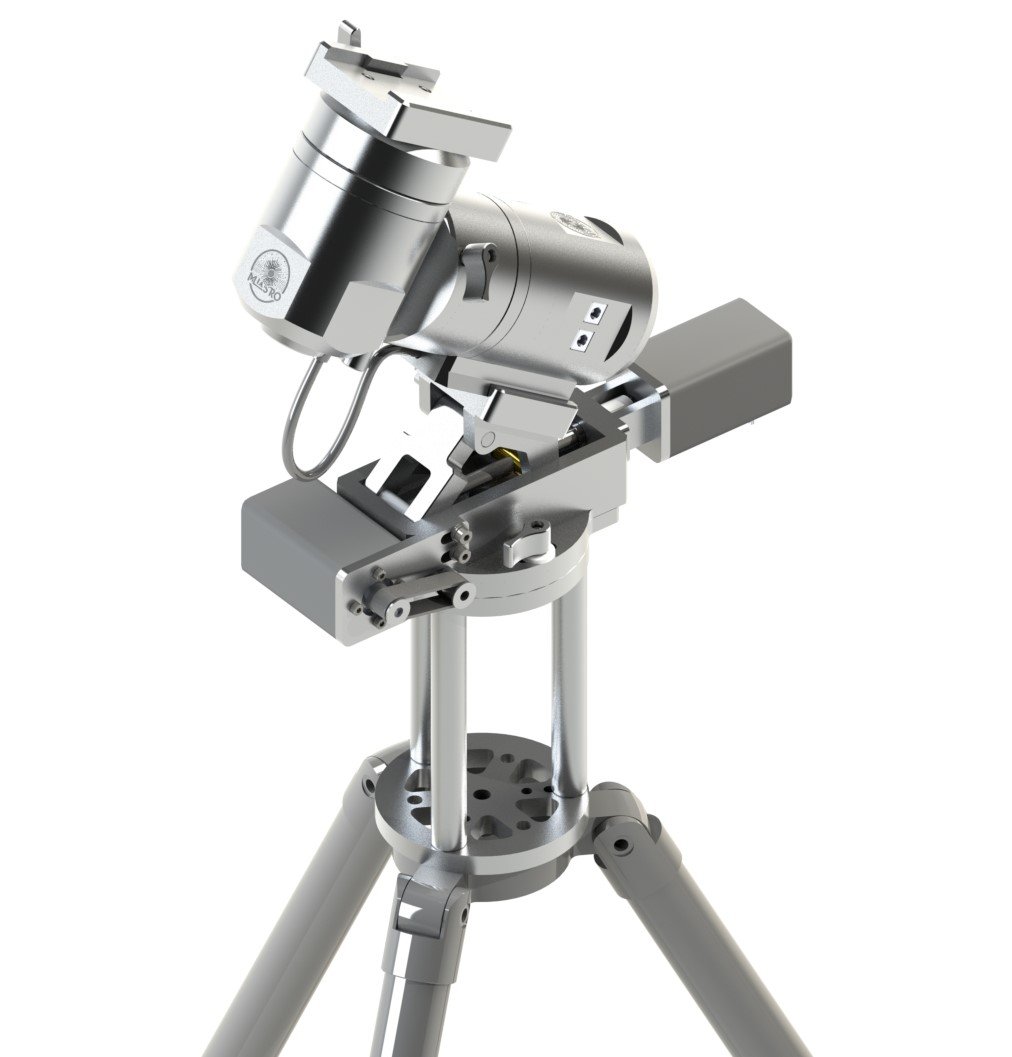
RPA will be available as an optional accessory for users who want automated polar alignment. Instead of manually adjusting the wedge, the RPA system motorizes the polar alignment mechanism and allows compatible software to perform the adjustment automatically.
This means you can configure Trinity according to the way you travel.
Keep it simple and light with the manual ZeroShift wedge, or add RPA when automation is more important.
The modular philosophy doesn’t stop at Tracker, Alt-Az and EQ. You choose how much mount you want to bring.
BUILT TO TRAVEL
3 DETACHABLE MODULES, TOOLESS ASSEMBLING.
A 3.5 kg mount isn’t particularly useful for travel if it is still one awkward 3.5 kg object.
That is why Trinity’s modularity matters just as much as its total weight.
Every major section can be detached, with individual pieces weighing approximately 0.8 to 1.3 kg. They can be placed separately inside a camera bag, arranged around other equipment in your luggage, or carried together in a compact dedicated bag. And they can be assembled in under a minute in the field without any tool.
This makes Trinity particularly suitable for air travel and longer trips where both weight and luggage volume matter.
It also makes a difference when travelling on foot. If you’re heading somewhere with a camera and lens, there is no reason to carry the DEC module. If you’re observing in Alt-Az, there is no reason to carry the EQ wedge.
Take what you need. Leave what you don’t.
That is Trinity.
UNIBODY CONSTRUCTION
Making Trinity smaller created a different engineering problem.
Our SAL-33 and MLAstro One make extensive use of what we jokingly call “flat-panel engineering.” It is simple, rigid, serviceable, and relatively economical to manufacture.
But when every gram and every millimeter matter, that construction method eventually reaches its limits.
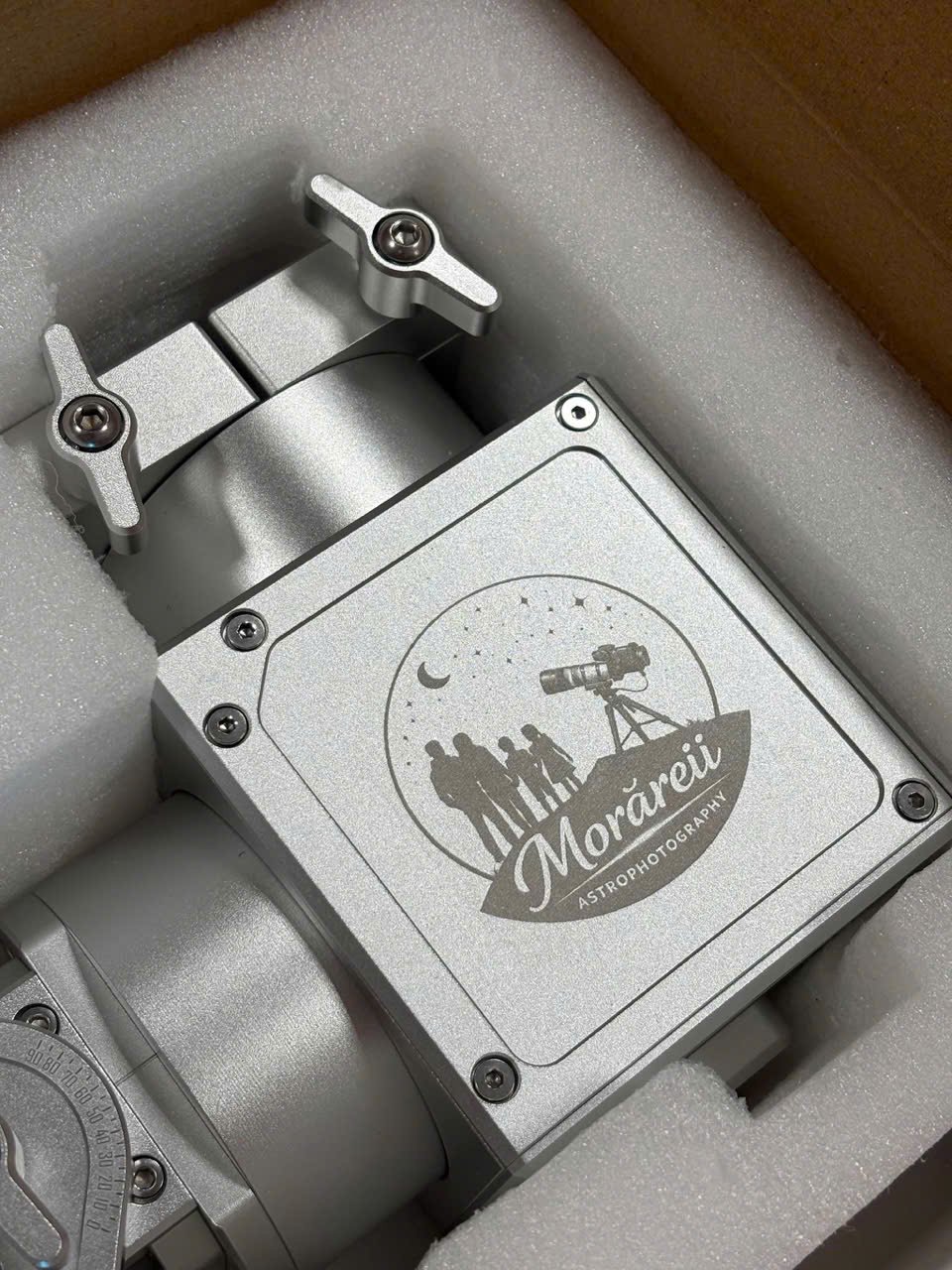
Trinity therefore uses a machined unibody architecture.
Removing unnecessary material while maintaining a continuous structural body allows us to significantly reduce size and weight without giving up the stiffness required from an astronomical mount.
It is considerably more expensive to manufacture than our flat-panel construction, but portability is the entire reason Trinity exists.
And development isn’t finished.
The current full EQ configuration is already under 3.5 kg, but we will continue optimizing the design before production. Wherever we can remove weight without compromising stiffness, stability, reliability, or serviceability, we will.
The commercial version may therefore be lighter still.
OPEN. REPAIRABLE. SERVICEABLE.
Compact unibody construction does not mean sealed construction.
Trinity follows the same design philosophy as our other MLAstro products: equipment should be designed not only to be assembled, but also to be disassembled.
We deliberately avoid unnecessary glued covers, permanently concealed fasteners, and construction methods that turn a simple component replacement into replacement of an entire mount.
Internal components are designed to remain accessible for servicing and replacement.
We want Trinity to be small.
We don’t want it to be a black box.
DESIGNED FOR THE MLASTRO ECOSYSTEM
Trinity is not an isolated travel product. It is being developed as part of the wider MLAstro mount ecosystem.
That includes support for MLAstro RPA Robotic Polar Alignment and integration with the MLAstro control platform.
Trinity will also support MLAstro Sunflower, our new electronic Solar Finder and Solar Tracker.
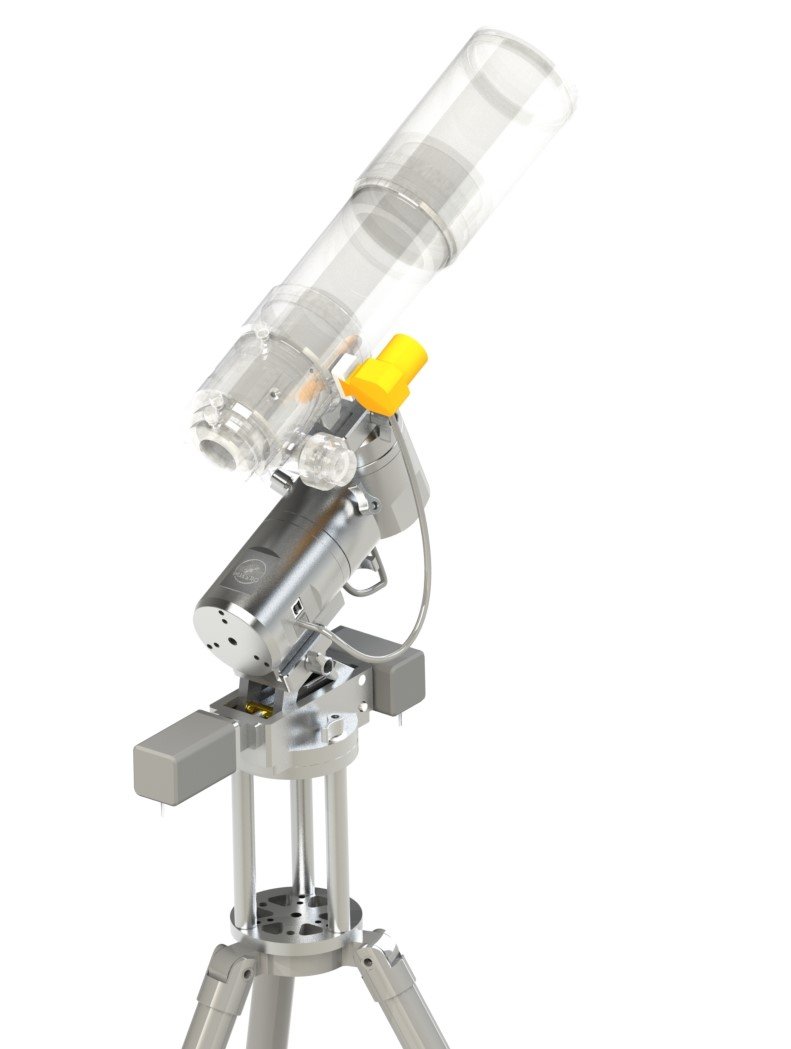
With Sunflower connected through the HC/ST4 interface, the system can automatically search for the Sun, center it, and then continuously guide on it to keep the Sun inside the field of view.
This is particularly useful for daytime observing because conventional astronomical alignment becomes much more difficult when Polaris and alignment stars aren’t visible.
For Solar visual observers and imagers, Sunflower can dramatically simplify setup. It is particularly useful for longer Solar imaging sessions, high-resolution imaging, mosaics, spectroscopy, and SHG imaging where keeping the Sun accurately positioned can otherwise require repeated corrections.
Sunflower is designed to operate with Trinity in both EQ and Alt-Az configurations.
It will also initially support MLAstro SAL-33 and MLAstro One, and we will work toward compatibility with other ST4-equipped mounts where practical.
Sunflower will be offered separately as an optional accessory.
MLASTRO TRINITY AT A GLANCE
Configuration: Tracker / Alt-Az / EQ
Tracker weight: approximately 1.3 kg
Alt-Az weight: approximately 2.7 kg
Full EQ weight: under 3.5 kg
Individual module weight: approximately 0.8 to 1.3 kg
Drive system: dual strain-wave
RA gearbox: Size 14, astronomy optimized
DEC gearbox: Size 14, astronomy optimized
Target payload without counterweight: approximately 7.5 kg
Target payload with counterweight: approximately 10 kg
Construction: CNC-machined unibody
Manual polar alignment: MLAstro ZeroShift
Robotic polar alignment: MLAstro RPA compatible, optional accessory
Solar acquisition/guiding: MLAstro Sunflower compatible, optional accessory
Serviceability: user-serviceable design
Target price: under US$1,000
Preorders: planned for around mid-December 2026
PORTABILITY IS THE NAME OF THE GAME
Trinity isn’t intended to replace every larger mount.
There will always be situations where more mass, larger gearboxes, and a heavier structure are advantages. If you’re permanently mounting a large telescope in an observatory, shaving another kilogram from the mount probably isn’t particularly useful.
Trinity is for the opposite situation.
It is for the telescope that goes on the plane with you.
The setup that gets carried up the trail.
The mount you can put in a camera bag instead of giving it its own suitcase.
The visual setup you decide to take outside because setting it up doesn’t feel like work.
And the astrophotography system that remains a real astronomical mount when you arrive.
Portability | Versatility | Power
The future is in the bag.
IMPORTANT DEVELOPMENT STATUS
MLAstro Trinity is currently in development. The specifications shown on this page describe our current prototypes and design targets and may change as we continue testing and optimizing the production design.
In particular, weights and payload figures should be considered current targets rather than final production specifications.
Our goal during the remaining development period is not to add unnecessary features or weight. It is to make Trinity lighter, simpler, and better at doing exactly what it was created to do: travel.
More detailed information on Trinity’s mechanical architecture, individual configurations, control system, RPA integration, testing, accessories, final pricing, and preorder arrangements will be published over the coming weeks.
8 reviews for MLAstro Trinity (Product Under Development)
Related products

- MLAstro SAL-33 (Pre-Order) Batch 10
-
$1.249,00Rated 5.00 out of 5
- Add to cart

- MLAstro personalized laser engraving
-
$25,00 – $55,00Price range: $25,00 through $55,00Rated 5.00 out of 5
- Select options This product has multiple variants. The options may be chosen on the product page
Satoru Murata –
Sounds fantastic! The sunflower too, although it would be nice to know how well it will be able to keep tracking in a solar eclipse setting 🙂 Will get it regardless. Cheers!
Christian Lebeda –
Hallo Minh,
Ich verfolge aufmerksam die Kreativtät und Entwicklung in Ihrem Unternehmen weiter so! Der SAL 33 wird die Trinity folgen.
John Sims –
Looks interesting. Can you comment on how you envision polar alignment to be done when using it as a star tracker
Nguyen Trong Minh –
we can do several ways. we can have the tracker connected to NINA/asiair and do the PA via 3 points PA as usual (asuming your lens is long enough).
or we can add accessories that allow you attaching lasers if you only want rough PA for widefields.
optical polar scope can also be attached via optional adapters.
Gabriel Oh –
Wow. Hört sich sehr gut an. Bin auch auf die Zukunft gespannt. Wird es auch eine Möglichkeit geben, die ISS zu verfolgen?
Nguyen Trong Minh –
@Gabriel: the ISS tracking capability is avaialble for all MLAstro mount via 3rd party software like the SkyTrack .
Bill Smith –
Hi Minh – Trinity is a fascinating development. The Sunflower accessory as well. I look forward to learning more about your new system and to the pre-order event, too!
PC Cheng –
Sunflower sounds great! Will get one! When it will be available?
Nguyen Trong Minh –
MLAstro Sunflower will be available after the Trinity. estimated mid-late Spring 27. it’ll be available before the Egypt Eclipse for sure.
Lee Maisel –
Hi Minh! This is a GREAT IDEA! I’m definitely interested!!!
Agostini Guido Maria –
Hello Minh, ha avuto una bellissima idea! La mia attrezzatura da fotografia pesa all’incirca 4,5kg e questa tua nuova montatura andrebbe benissimo per chi viaggia in cerca di cieli bui.
Sarò felice di fare acquisti con te.